
18 November 2026
When Do Kids Stop Sounding Out Words? UKG to Class 2 Guide
When Do Kids Stop Sounding Out Words? UKG to Class 2 Guide
posted on : 11 November 2026
By Nitin Jain, Founder, Learn2Read · Published 11 November 2026
Nitin Jain founded Learn2Read, which teaches live online phonics classes to children aged 3 to 12. Sources checked against Linnea Ehri's research on how children store words, the US Institute of Education Sciences practice guide on early reading, published reading-fluency norms and NHS guidance. Last reviewed: 11 November 2026.
Your child reads "c-a-t, cat" on page one. Good. Then "c-a-t, cat" again on page three, and page five.
By bedtime you've heard the same three sounds a dozen times, and one question is stuck in your head: when do kids stop sounding out words? And will yours?
You're far from the only parent asking. One Mumsnet thread is titled, word for word, "When do children stop needing to sound out words they've seen many times?" One typical reply: "Fairly normal - they learn blending then overdo it for a time!"
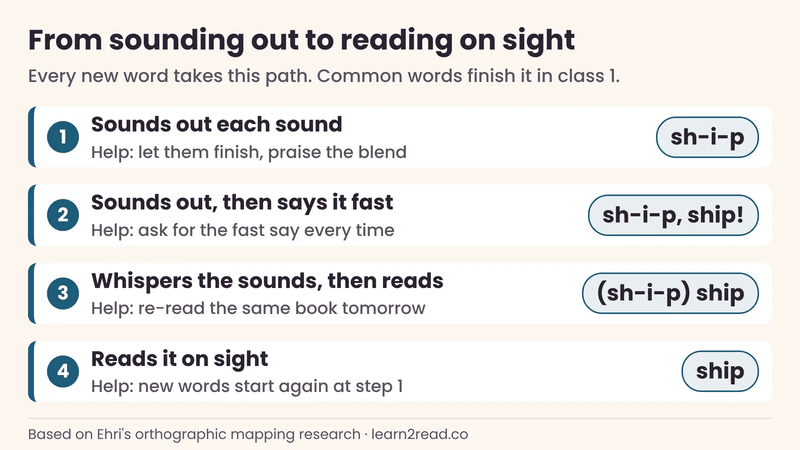
Here's the short version. Many children sound out nearly every word for a few months after they learn to blend, and the sounding out is how each word gets stored.
With the right kind of practice, each word moves from "sound it out" to "just know it", one word at a time, and a typical child reads common words on sight by the end of class 1 (Year 2 in the UK, Grade 1 in the US), though the exact timing varies from child to child.
Below: what's normal at each stage, why some words refuse to stick, a 10-minute routine for tonight, and the signs that are worth a word with the teacher. It's written for parents of children in UKG and class 1 in India, KG2 and Grade 1 in the Gulf, and Reception, Year 1 or kindergarten elsewhere.
In this guide:
The short answer · Why your child sounds out every word · How many times before a word sticks · Why the same word gets sounded out on every page · Should you tell them to stop? · A 10-minute routine · Normal or worth asking about?
When Do Kids Stop Sounding Out Words? The Short Answer
Kids stop sounding out a word once they've read it correctly a few times and stored it in memory. For most children, that happens to the most common words during class 1 (Year 2 in the UK, Grade 1 in the US). New and long words still get sounded out for years, just faster and often silently.
There isn't one birthday when sounding out ends; it fades word by word.
Your child might read "the" and "is" instantly while still sounding out "ship" and "frog". That mix is exactly what progress looks like.
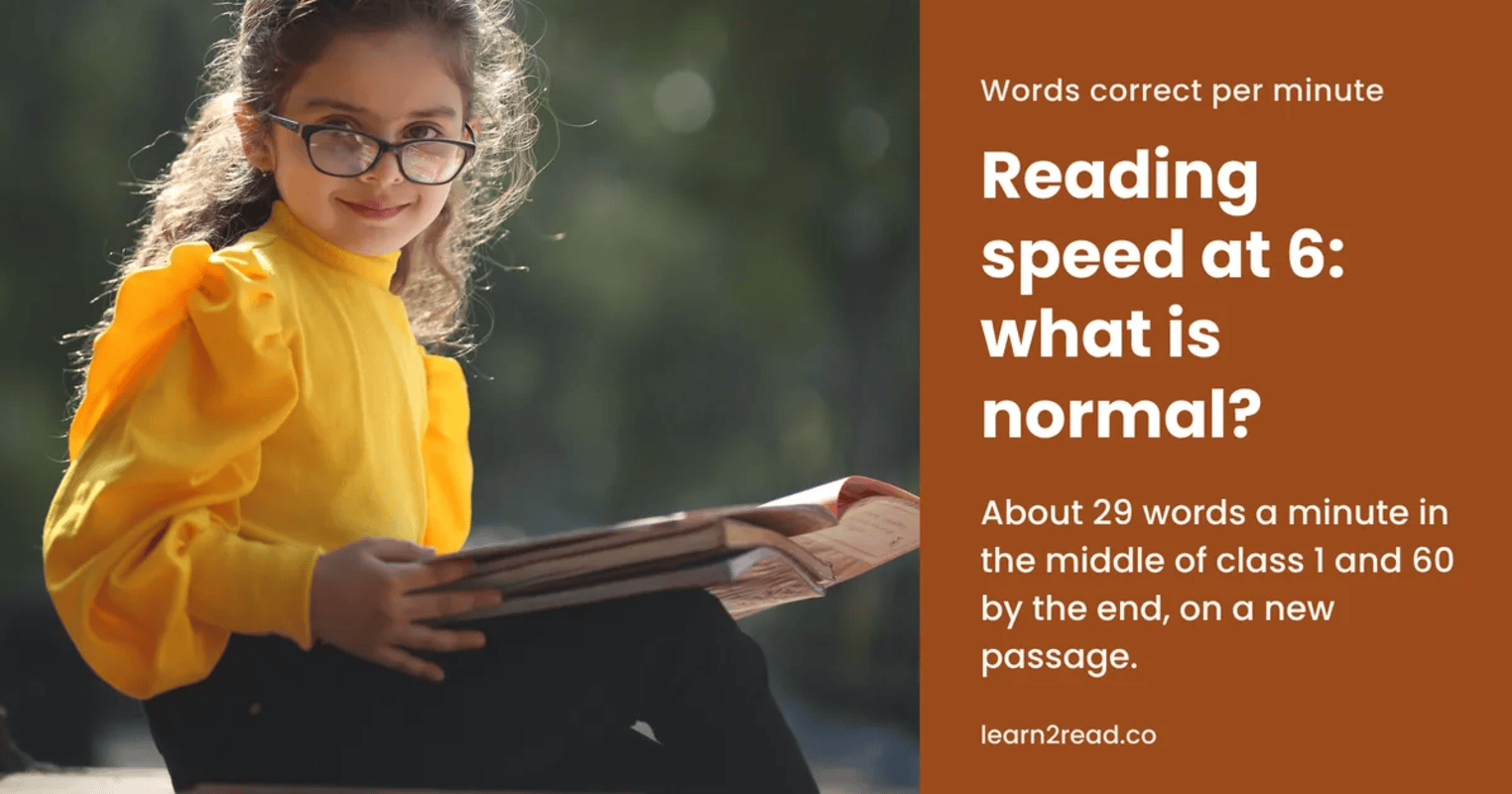
The fluency numbers tell the same story. In widely used norms for oral reading fluency from researchers Jan Hasbrouck and Gerald Tindal, a typical child at the end of Grade 1 reads about 60 words correct per minute (the 50th percentile, spring). Nobody reads 60 words a minute by sounding out every one, so by then most familiar words are being read on sight.
Stage | What sounding out usually looks like | Normal? |
Just learned to blend (UKG, KG2, Reception) | Sounds out almost every word, aloud, slowly | Yes, this is the stage |
Early class 1 (Year 2 in the UK, start of Grade 1 in the US) | Reads a handful of very common words fast, sounds out the rest | Yes |
End of class 1 (Year 2, end of Grade 1) | Sounds out new or long words, often under the breath; reads familiar words on sight | Yes |
Class 2 to 3 | Sounds out only unfamiliar words, mostly silently and quickly | Yes |
Still sounding out the same simple words after a year of steady phonics | Short words like "and" or "can" never seem to stick | Worth asking about (see the last section) |
Why Does My Child Sound Out Every Word?
Children sound out every word because sounding out is how new words get stored in the brain. Sounding out a word and checking it against what it should say is the step that files the word away for instant recall later. Guessed words skip that step, so they are not stored the same way.
Researchers call this filing process orthographic mapping (connecting each letter in a word to its sound, so the spelling sticks to the word in memory). Reading researcher Linnea Ehri, whose work this idea comes from, describes it as "the formation of letter-sound connections to bond the spellings, pronunciations, and meanings of specific words in memory."
In plain words: a sight word is a word your child has sounded out correctly enough times that it now comes back instantly. Reading Universe, an early-reading site from public broadcaster WETA, puts it simply: storing a word this way "is not the same as just memorizing the way a word looks."
That's the idea that changes how this stage feels. The sounding out you're tired of hearing is the storing. Your child is building the word bank, one word at a time.
How Many Times Does a Child Need to Read a Word Before They Know It?
Once children blend confidently, usually from about class 2 (Grade 2), typically developing readers need to read a word correctly only one to four times before it is stored. Beginners in UKG and class 1, and children who find reading harder, usually need more correct reads. What counts is reading the word correctly by sounding it out, because a guessed word doesn't get stored the same way.
The "one to four times" figure comes from research by Reitsma (1983), summarised by Reading Universe, which says typically developing readers "from second grade on" who have these mapping skills "only need to see and read a printed word one to four times" before it is stored. Australia's Five from Five (more in our guide to the self-teaching theory of phonics) adds the part parents rarely hear: "struggling readers will need many more exposures."
Two things follow for home practice:
Correct reads matter more than total reads. If your child guesses "house" for "home", that read doesn't build the right memory. Our guide on why children guess at words covers how to stop that habit.
The same word, soon, beats lots of different words. Reading Universe's one-to-four figure counts correct reads of the same word, so meeting a word several times in one book you re-read gives it more chances to stick than meeting it once in each of three different books.
Why Does My Child Sound Out the Same Word on Every Page?
A child who sounds out the same word on every page usually hasn't yet read it correctly enough times for it to stick, or is missing one small step after the blending. Four causes cover most cases, and each one has a simple fix at home.
The letter sounds aren't automatic yet. If your child has to pause to remember what "sh" says, all their effort goes on recall and none is left for storing the word. Five minutes of sound review a day fixes this. Our guide for a child who keeps forgetting letter sounds has a quick daily routine.
They sound it out but never say the whole word fast. Some children say "f-r-o-g" and move on without ever saying "frog" at normal speed. The fast "frog" at the end is the moment the word gets stored. If blending itself is still shaky, start with our guide on how to teach blending.
The book has too many new words. When most words on a page are new, a child can't re-read any of them enough times. A book matched to the sounds your child knows (a decodable book) repeats words on purpose. Our decodable books guide explains how to pick one.
Odd spellings in common words. Words like "said", "was" and "the" have one or two letters that don't follow the usual sound rules, so sounding out gets most of the word right but not all of it. Sound out the regular part, then point out the odd letters (the "ai" in "said"). Our sight words guide covers this.
Sometimes it's simply caution. A child who was praised for careful sounding out may keep doing it for words they already know, just to be safe. That fades once they notice they can read a word fast and still get it right.
Should I Tell My Child to Stop Sounding Out Words?
Parents should not tell a child to stop sounding out words. Telling a child to stop usually swaps a slow, correct read for a fast guess, and guesses don't store words.
When do children stop sounding out words they already know? Sooner, if you keep the sounding out and add one small step after it: say the word again, fast, then re-read it later in the same session.
Flashcards that ask a child to recognise a word's shape are tempting here, but they miss the point.
The storing happens when the letters are linked to sounds, which is why phonics is the route to fast reading, even for tricky words. Reading Rockets notes that children "can rely on phonics to decode most of the word and commit to memory the irregular letter/letters."
What to say instead:
Instead of | Try |
"You know this one, just read it!" | "Sound it out, then say it fast." |
"Stop sounding out, it's taking forever." | "You read that word on page 2. Have a look. Do you know it now?" |
"Look at the shape of the word." | "Point to each sound as you say it, then say the whole word." |
Covering words with your finger to rush them | Letting them finish, then asking for the fast version |
A 10-Minute Routine to Help Your Child Stop Sounding Out Every Word
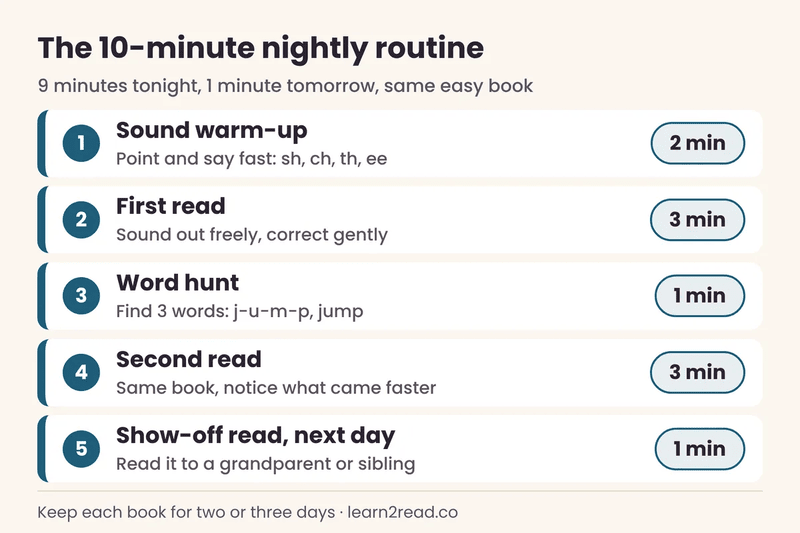
Short, daily re-reading of the same easy text is one of the best-supported ways to move words from sounding out to instant reading. The US Institute of Education Sciences recommends that every child "reads connected text every day to support reading accuracy, fluency, and comprehension", and its guide notes that in repeated reading children "are repeatedly exposed to the same words."
Try this, most evenings, at the same time each day (after dinner or before bath works for many families):
Sound warm-up (2 minutes). Point to 8 to 10 letter sounds or digraphs (sh, ch, th, ee) at random. Your child says each sound fast.
First read (3 minutes). Your child reads a short decodable book or page. Let them sound out whatever they need. Correct gently.
Word hunt (1 minute). Find three words they sounded out. Read each one again, sounded out and then fast: "j-u-m-p... jump."
Second read (3 minutes). Same book, again. Most children read it noticeably faster the second time. Tell them so: "You read 'jump' without sounding it out that time!"
Show-off read (1 minute, next day). Your child reads the same page to someone new: a grandparent on a video call, a sibling, a soft toy.
Keep each book for two or three days before moving on. Re-reading feels boring to adults, but if you're wondering how to help your child read faster, it builds speed faster than new books alone. New books still matter for vocabulary, so read those aloud together.
To a child who just read "ship" without stopping, it feels like winning.
When Do Kids Stop Sounding Out Words, and When Should You Ask for Help?
Sounding out every word is normal for a child who has recently learned to blend, usually through UKG reading and much of class 1. It's worth a conversation with the class teacher if, after a year of steady daily phonics, your child still sounds out the same short, simple words every time, or reading stays very slow and effortful.
Usually normal | Worth a word with the teacher |
Sounds out new words but reads some common ones fast | Still sounds out "and", "can", "it" after many months of practice |
Reads a book faster on the second read | Second read is as slow as the first, day after day |
Sounds out under the breath | Loses the start of a word by the time they reach the end |
Gets faster week by week, even slowly | Avoids reading or gets very upset about it |
Sounds out long words in class 2 | Is reading well below classmates by the end of class 1 |
The NHS lists "being slow and hesitant when reading aloud" among the possible signs of dyslexia, along with reading below the level expected for a child's age. One sign on its own isn't a diagnosis. Bring your notes to the next PTM (parent-teacher meeting) and ask what the teacher sees in class.
If you're still worried, ask your paediatrician to check your child's hearing and eyesight first, since both affect reading. Our guide to the early signs of dyslexia explains what to look for between ages 4 and 7.
FAQs
When do kids stop sounding out words?
Most children stop sounding out the most common words during their first full year of reading, which is class 1 in India, Year 2 in the UK and Grade 1 in the US. Each word stops needing to be sounded out once a child has read it correctly a few times. Unfamiliar and long words keep being sounded out for years, just faster and usually silently.
Is it normal for a class 1 child to sound out every word?
Yes. Children who have just learned to blend sound out almost everything, and the habit shrinks word by word over the year. By the end of class 1, a typical child reads familiar words on sight and sounds out only new ones. If short words like "and" never stick after months of practice, mention it to the class teacher.
My child read a word fast yesterday but sounds it out again today. Is that normal?
Yes. A word usually needs several correct reads, spread over a few days, before it comes back instantly every time. Re-read the same short book the next day and ask for the fast say after each sounded-out word.
How many times does a child need to read a word before they know it?
Typically developing readers from about Grade 2 (class 2) need to read a word correctly only one to four times before it is stored as a sight word, according to research summarised by Reading Universe. Beginners and children who find reading harder usually need more correct reads. Guessed or skipped words don't count, because the word is stored by linking its letters to its sounds.
My child spells every word letter by letter ("see, ay, tee") before reading it. Is that sounding out?
No. Letter names like "see, ay, tee" don't blend into "cat", but letter sounds (c, a, t) do. A child who spells out letter names needs to switch to letter sounds before sounding out can work. Practise the sounds of the letters they already know by name, a few minutes a day.
When will my child move on from sounding out to just reading?
Most children move on word by word, starting with the most common words, during their first full year of reading. A word moves to instant reading once it has been sounded out correctly and said fast a few times. Daily re-reading of the same easy book speeds this up more than reading lots of new books.
Should I tell my child to stop sounding out words?
No. Sounding out is how a child stores new words, and asking them to stop usually leads to guessing. A better approach is to ask the child to sound the word out and then say it fast, and to re-read the same short book the next day so familiar words come back quicker.
Will sight word flashcards stop my child sounding out every word?
Not on their own. Flashcards that train a child to recognise a word's shape don't build the letter-sound links that make words stick. Flashcards can help if the child sounds out the word on the card, says it fast, and then meets the same word in a real book the same day.
My child sounds out correctly but reads very slowly. Is that a problem?
Slow but correct reading is a normal stage for beginning readers and usually speeds up with daily re-reading of easy books. If reading is still very slow and effortful after a year of regular phonics, or a child is reading well below classmates, talk to the class teacher and ask a paediatrician to check hearing and eyesight.
When should I worry that my child sounds out every word?
Consider a conversation with the class teacher if a child still sounds out the same short, common words after about a year of steady daily phonics, or if the second read of a book is never faster than the first. These signs are worth checking, but none of them on its own means a child has dyslexia.
Read Next
Child Can Read Words but Not Sentences? Fix Choppy Reading: the next stage, once single words come fast but sentences still sound robotic.
How to Teach Blending: When Your Child Knows the Sounds but Can't Read the Word: if sounding out still doesn't turn into a word at all.
Why Your Child Guesses at Words (and How to Stop It): for the child who swings the other way and stops sounding out too soon.
My Child Knows the Alphabet (ABCD) but Can't Read: Letter Names vs Letter Sounds: if your child spells out letter names instead of saying sounds.
When do kids stop sounding out words? Word by word, once each one has been read correctly a few times. Sounding out every word is a stage, and a useful one. Keep the sounding out, add the fast say at the end, and re-read the same book tomorrow. If you'd like a teacher to guide your child from sounding out to smooth reading, book a free trial class with Learn2Read, a live online phonics programme for children aged 3 to 12.

Latest Posts
14 November 2026
How Many Words Per Minute Should a 6 Year Old Read? (2026)
11 November 2026
When Do Kids Stop Sounding Out Words? UKG to Class 2 Guide

7 November 2026
Child Refuses to Read at Home? Check the Book First, Age 4-8

A new chapter from Learn2Read
Read Before They Read
Before you teach your child to read, read this. A calmer, clearer way into your child’s reading journey—with a practical guide written for real Indian homes.